
Multiservice irrigation
Delphine Burger-Leenhardt Koladé Akakpo Elise Audouin Sami Bouarfa Esther Guillot Crystèle Léauthaud Ludovic Lhuissier Aurélie Metay Claire Wittling
Foreign equivalent(s):
Irrigation multiservice (fr)


Multiservice irrigation refers to an irrigation practice that combines the objectives of using water resources sparingly and efficiently with the provision of a variety of ecosystem services at the field and territorial scales.
Irrigation is traditionally used to increase the yields of certain cash crops or to maintain them despite climatic variability. However, irrigation is a highly water consuming use that, being non prioritised, is subject to restrictions during water shortages. The first level of agro ecological transition therefore consists in using irrigation more efficiently and frugally, without fundamentally changing the agricultural system. This first level is often based on technical improvements of the irrigation system (appropriate equipment, sensors and control tools). A second level involves replacing crops that require heavy irrigation with others that are less sensitive to water stress (for example, replacing maize with sorghum), without overturning the existing cropping system.
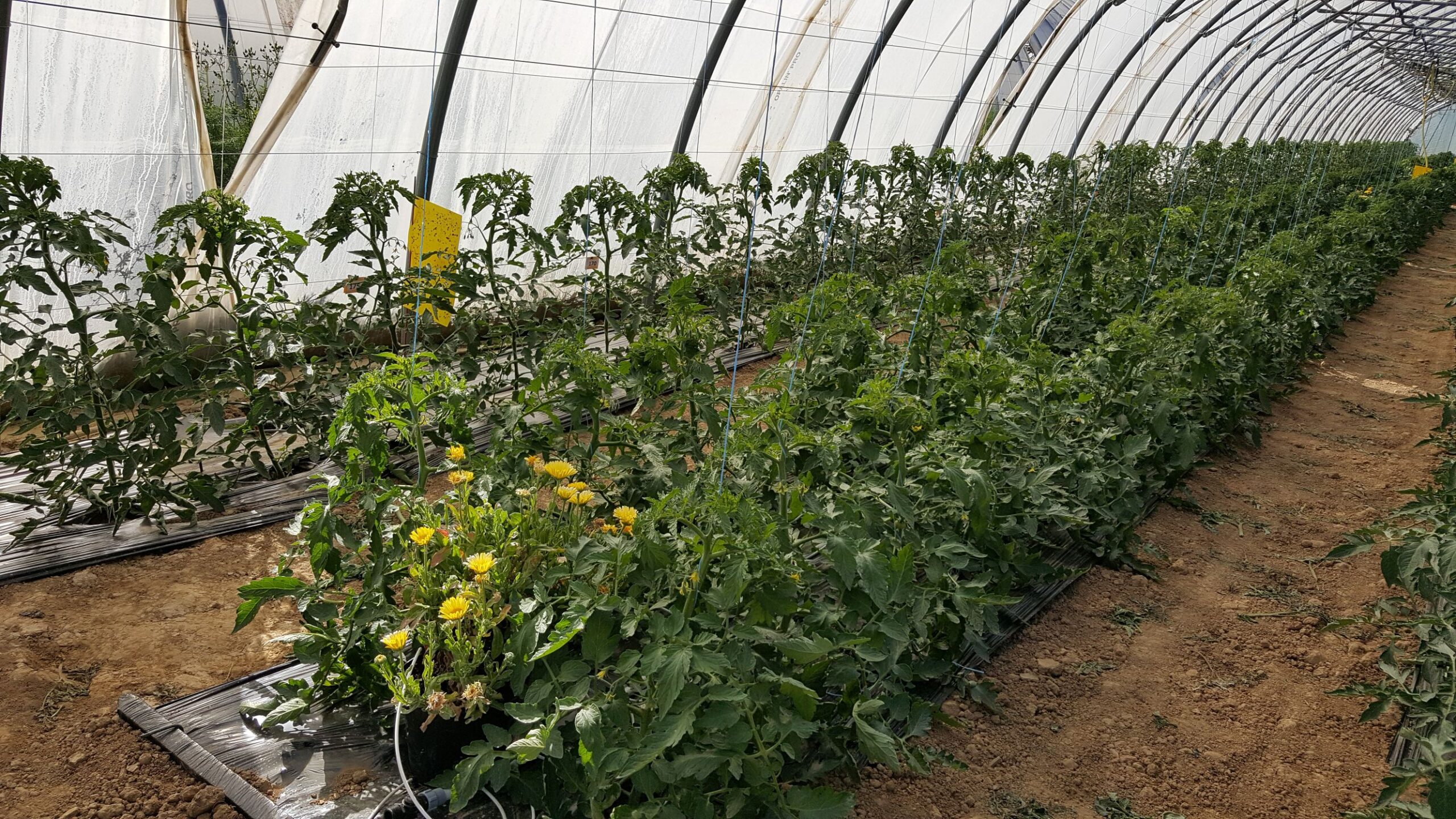
Multiservice irrigation belongs to a deeper transition, which includes the diversification of cultivated species (new crops, especially perennials, intermediate cover crops, hedges, etc.) and the activation of ecological functions within the system. For instance, irrigation can allow for a longer duration of cover crops and higher yields, thereby increasing the return of organic matter to the soil. This, through its effects on biological activity and soil structure, can promote the soil’s water-storage capacity in the long term. In protected horticulture, irrigation can allow the integration of service plants and the creation of a favourable micro climate to regulate populations of crop auxiliary organisms. Ecosystem services (soil fertility, carbon and water storage, pest regulation, …) are thus enabled or amplified by irrigation; these services complement the traditional food supply function provided by the irrigation of cash crops.
By preserving soil and crop health and by enabling a more diversified food supply in territories, multiservice irrigation increases the potential of agro ecological practices and contributes to the One Health logic.
References to explore
Leenhardt, D., Leauthaud, C., Bouarfa, S., Loubier, S., Alletto, L., Dominguez, J., Urruty, N., Wittling, C., Lesur-Dumoulin, C., Guillot, & E., Marguerie, M. (2025). L’irrigation et l’agroécologie peuvent-elles faire bon ménage ? Vers une irrigation multiservice. Dans S. Bouarfa, C. Fontaine, M. Montginoul, T. Pelte, & E. Sauquet (Dirs). A l’ère de l’anthropocène, comment partager l’eau en France ? [pp. p 135-147]. Éditions QUAE. Collection Matière à débattre et décider. ISBN 978-2-7592-4098-2. https://hal.inrae.fr/hal-05523274v1
Leauthaud, C., Leenhardt, D. (2025). Towards multiservice irrigation for an agroecological future. npj Sustain. Agric. 3, 55. https://doi.org/10.1038/s44264-025-00094-w
Dominguez Bohorquez, J. D., Leenhardt, D., Alletto, L., Bouarfa, S., (2026). Comment l’agriculture peut‑elle s’adapter aux étés de plus en plus secs ? The Conversation. https://theconversation.com/comment-lagriculture-peut-elle-sadapter-aux-etes-de-plus-en-plus-secs-286702


Do you have an opinion or a question about this definition?
Your email address will not be published.
Required fields are marked with *.